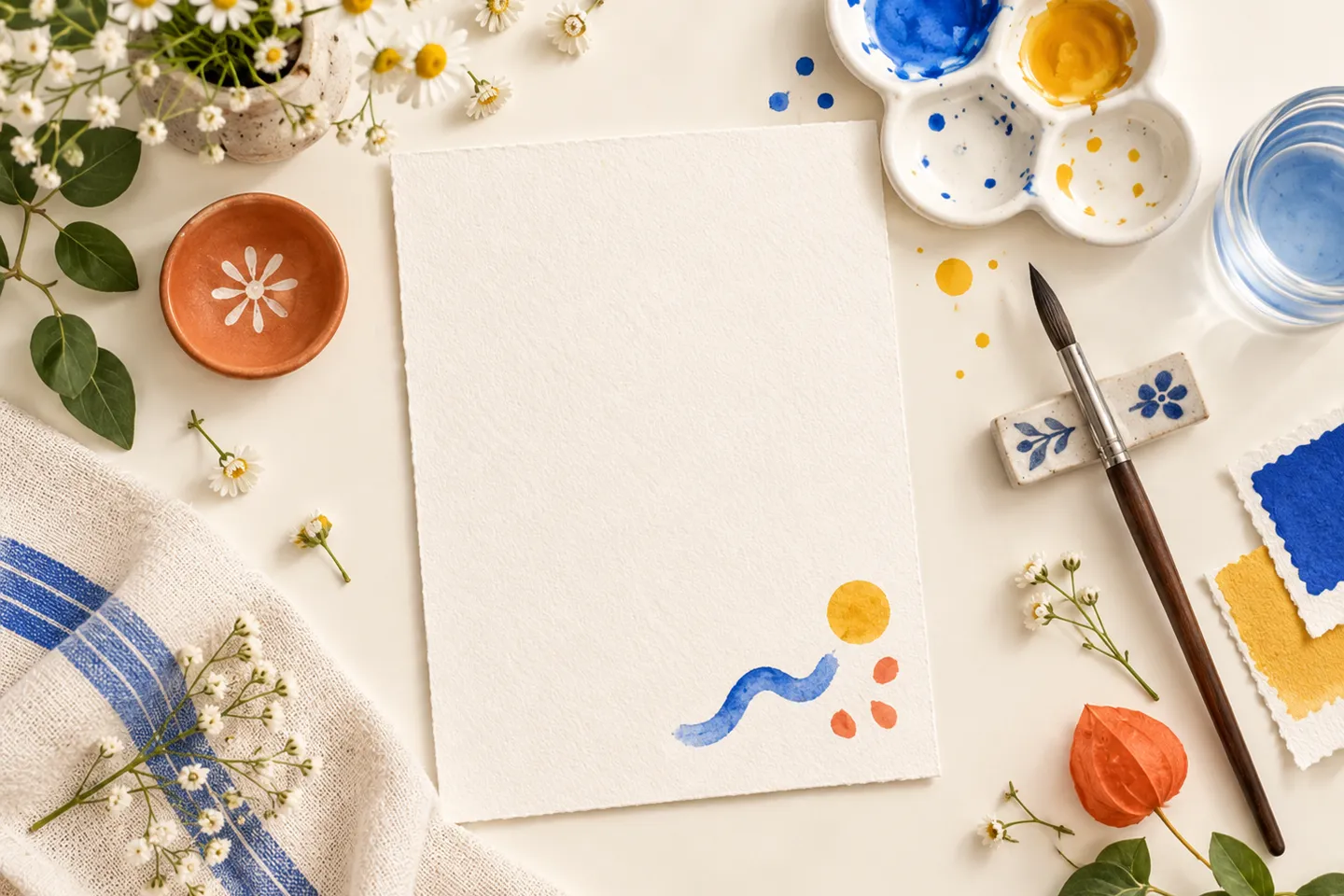
There is a particular kind of courage in sitting down with a blank page when you have no idea what you are doing.
Not the loud kind. Not the kind that gets applause. The small, everyday kind that says: I am allowed to try this. I am allowed to be bad at it. I am allowed to find out.
Most adults have lost this. Not because they are cowards. Because they got good at things, and being good at things is comfortable, and comfort is sticky.
How competence becomes a cage
Think about your week. How much of it is spent doing things you already know how to do?
Probably most of it. That is what adulthood rewards. You get paid for what you are good at. You get praised for what you are good at. Your calendar fills up with your competence.
Somewhere along the way, a quiet rule forms. If I am not already good at it, I should not be seen doing it.
So we stop drawing, because our drawings look like a child’s. We stop singing, because someone once laughed. We stop trying new things in front of other people, because being a beginner feels like being exposed.
We start treating curiosity like something that needs a qualification.
And here is the cost. A life where you only do what you are already good at is a life that stops growing. It is comfortable. It is also very small.
The material does not care who you are
A brush does not ask for your portfolio. A ball of yarn does not care what you do for work. A lump of clay has no idea about your job title, your follower count, or what you studied at university.
Materials meet you exactly where you are. That is the whole gift of them.
Paint does the same thing for a surgeon and a student. It runs, it blends, it dries. Yarn tangles for everyone. Paper creases the same way in every pair of hands.
This is rarer than it sounds. Almost everything else in adult life is sorted by who you are. Art materials are not. They only respond to what you do, right now, with your hands.
Being bad is the door, not the wall
Every person who is good at something was once bad at it. This is so obvious that we forget it. We look at the finished painting and not at the ten years of bad paintings behind it.
The philosopher Epictetus said something close to this two thousand years ago. If you want to improve, be content to be thought foolish and stupid. He was not being cruel. He was being practical. There is no path to being good that does not pass through being bad. You can walk that path or you can stand at the gate forever.
Being a beginner is not a problem to be solved. It is the front door. Everyone walks through it. The only question is whether you are willing to.
Try this before you decide anything
Take one sheet of paper. Two colours. Ten minutes.
Make marks without deciding what they should become. Follow one shape. Repeat a line. Let one colour bleed into the other and watch what happens.
Do not fix anything. Do not start over. Do not judge it while it is happening.
When the ten minutes are up, look at it. You do not have to like it. You probably will not. That is not the point.
The point is that for ten minutes you were a person who tried something without knowing how it would turn out. That person still exists. You just have not visited them in a while.
What beginners have that experts lose
There is a well-known idea from Zen practice. In the beginner’s mind there are many possibilities. In the expert’s mind there are few.
Beginners see everything, because they do not yet know what to ignore. They ask questions the expert stopped asking years ago. They make mistakes that turn into discoveries, because they did not know the mistake was a mistake.
Experts are useful. But beginners are alive in a way experts have to work to recover.
You have this for free right now, in every craft you have never tried. It is worth something. Do not rush past it.
At our table
At the Gubbi art table, being a beginner is not a stage to hurry through. It is a perfectly good place to be. Some of the best afternoons we have seen came from people who walked in saying “I can’t even draw a straight line.”
Good. Nobody needs a straight line. We need people willing to make a wobbly one and see where it goes.
Give yourself permission. Nobody else is going to.